
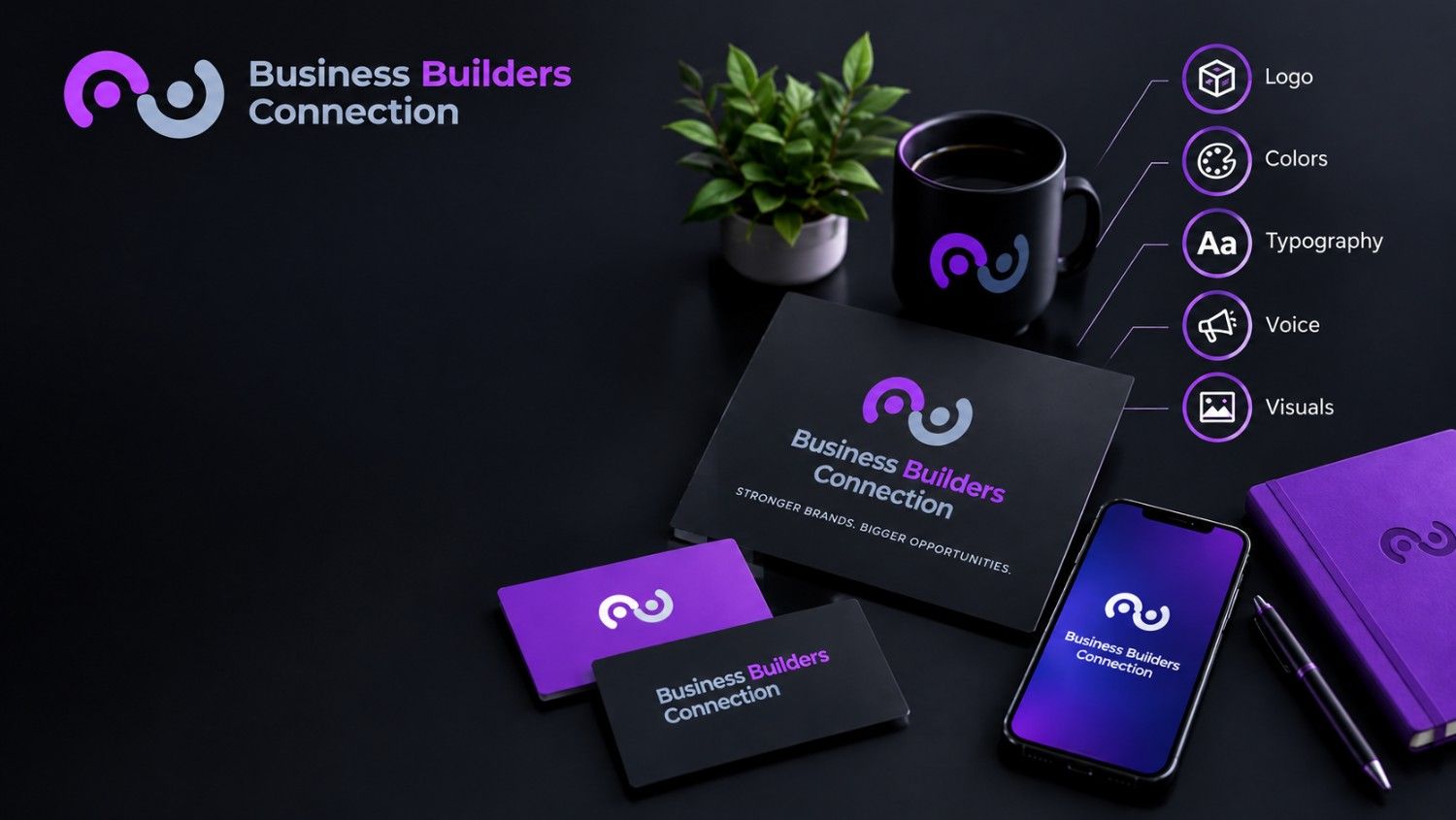
A logo alone does not make a brand. What actually makes a business memorable is a whole system of visual and verbal choices working together consistently. This is the core idea behind solid brand identity strategies for small businesses.
This blog breaks down the elements that build a strong, recognizable identity and how small businesses can put them to work.
Why Branding Is More Than a Logo
Many business owners assume branding starts and ends with a logo design. In reality, a logo is just one piece of a much bigger system.
- A logo acts as the anchor symbol, but it cannot carry an entire identity alone
- Color, typography, and imagery all work together to create recognition
- Consistency across every touchpoint matters more than any single design element
- A disconnected set of visuals confuses customers rather than building trust
Solid brand identity strategies for small businesses treat every visual and verbal choice as part of one connected system, not a collection of separate decisions made in isolation.
Ready to create a brand that customers recognize and remember? Explore our affordable branding services for small businesses to discover practical branding solutions designed to strengthen your visual identity, build credibility, and help your business stand out.
The Visual Side of Brand Identity
Visual identity is what people see first, and it shapes their first impression before they read a single word.
- Logo: the central symbol tied to the overall business strategy
- Color palette: a curated set of primary and secondary colors chosen for the emotional response they create
- Typography: a consistent set of two to three fonts used across headings, subtitles, and body text
- Foundational shapes: geometric grids suggest order, soft curves suggest comfort, angular lines suggest a tech-forward feel
- Imagery style: consistent framing, filters, and composition across photos and video
Thoughtful brand colors and typography choices alone can make a business instantly recognizable, even without the logo visible, which is exactly the kind of consistency strong identities are built on.
The Verbal Side of Brand Identity
Words carry just as much weight as visuals, giving a business its personality and voice.
- Brand voice and tone: whether a business sounds playful, authoritative, or straightforward, this tone needs to stay consistent across web copy, emails, and social replies
- Taglines and slogans: short, memorable phrases that boost recall
- Brand story: an honest narrative covering a company’s values, purpose, and history
Getting this right is a core part of effective brand communication, since customers respond to businesses that sound like real, consistent voices rather than generic corporate copy.
Weak Branding vs Strong Branding
The difference between a forgettable brand and a memorable one usually comes down to a few clear patterns.
- Weak branding relies on generic templates, mismatched visuals, and inconsistent design across channels
- Strong branding follows a documented style guide applied consistently everywhere
- Weak branding competes mainly on price and gets easily substituted
- Strong branding is positioned around specific values, creating a real competitive edge
- Weak branding tries to appeal to everyone with a vague message
- Strong branding speaks directly to a clearly defined target audience
Recognizing these patterns helps business owners spot where their own branding might be falling short before customers notice it first.
Building a Clear Positioning Statement
At the center of every strong identity is a clear positioning statement that defines exactly what a business stands for.
- It names the target audience directly
- It identifies the specific problem that the audience struggles with
- It states the unique benefit the business provides
- It gives a reason customers should believe the claim
A positioning statement acts as the foundation that every visual and verbal decision builds on top of, which is why it belongs at the very start of any serious branding project.
Using Brand Guidelines as an Internal Compass
As a business grows, branding stops being just a customer-facing concern and becomes an internal alignment tool as well.
- A documented style guide keeps designers, marketers, and founders working from the same playbook
- New team members can get up to speed quickly with clear visual and verbal standards
- Consistency becomes easier to maintain as more people touch the brand
- Style guides prevent small inconsistencies from piling up over time
Applying These Elements Online
A lot of a small business’s brand identity now lives entirely online, which makes digital consistency especially important.
- Website design should reflect the same colors, fonts, and tone used everywhere else
- Social media profiles need consistent visuals across every platform
- Email marketing should carry the same voice used on the website and in ads
- Strong online branding strategies for small businesses treat every digital touchpoint as an extension of the same identity, not a separate design exercise
The Building Blocks in Practice
Pulling all of this together, a few core business branding elements consistently show up across strong, recognizable identities.
- A clear logo used consistently across every platform
- A defined color palette applied without exception
- Consistent typography across print and digital materials
- A documented brand voice guiding all written content
- A clear positioning statement anchoring every decision
Finding the Right Support
Not every small business has the internal resources to build a complete brand identity system from scratch, which is where outside support becomes valuable.
- Look for a partner who understands both visual design and brand strategy, not just logo creation
- Ask to see examples of full brand systems, not isolated logo projects
- Confirm whether ongoing brand guideline support is included after the initial build
- Compare pricing carefully, since quality and cost can vary widely between providers
For businesses in California, finding affordable branding services in California does not have to mean sacrificing quality. Many providers offer strategic branding work built specifically for small business budgets, without the high price tag often associated with larger agencies. Working with a team offering genuinely affordable branding services in California allows small businesses to build a complete identity system without overspending on the process.
The Bottom Line
A strong, recognizable identity does not happen by accident. It comes from a deliberate system of visual and verbal choices working together consistently across every customer touchpoint. Solid brand identity strategies for small businesses bring together color, typography, voice, and positioning into one cohesive system that builds trust and long-term recognition.
Whether you are just starting out or refining an identity that already exists, thoughtful brand identity strategies for small businesses pay off well beyond the initial design work.
Ready to build a brand identity that actually sticks with your customers? Contact Business Builders Connection today to talk through your business and get a branding plan built around your goals.
Frequently Asked Questions
What is the difference between a logo and a full brand identity?
A logo is just one visual element, while a full brand identity includes color, typography, imagery, voice, and positioning working together as one consistent system.
How much does professional branding typically cost for a small business?
Costs vary depending on scope, but many providers offer affordable branding services in California built specifically for small business budgets rather than large corporate rates.
How long does it take to build a complete brand identity?
Most projects take a few weeks to a couple of months, depending on how many elements are included and whether the business already has some existing visual assets.
Do I need a brand style guide if I am a very small business?
Yes. Even a simple style guide keeps visuals and messaging consistent as you create new content, hire help, or expand into new marketing channels.
Can I update my brand identity strategies for small businesses later without starting completely over?
In most cases, yes. A refresh can update colors, typography, or messaging while keeping core elements like your logo or positioning statement intact.
📅 Last updated: